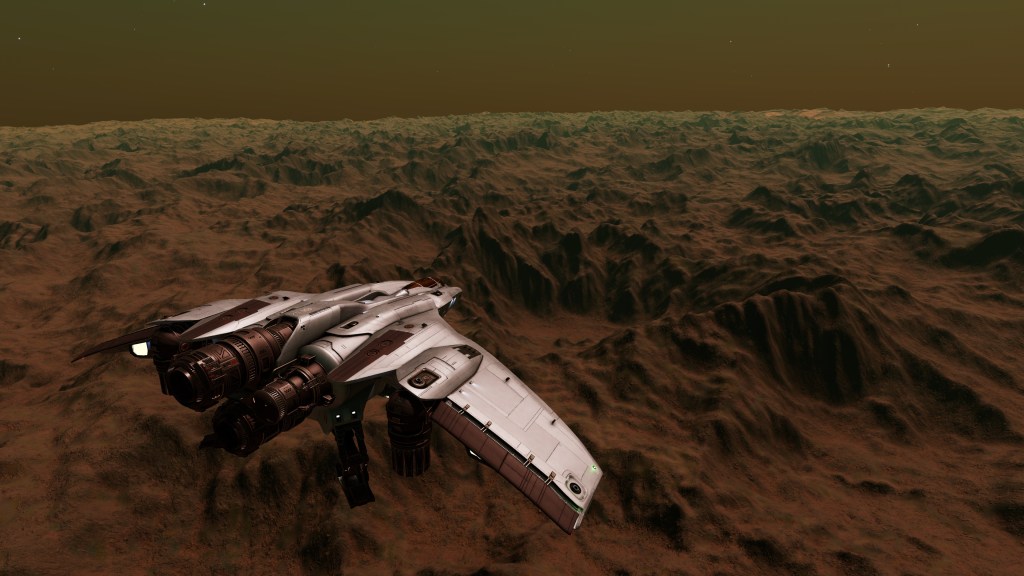
MISSION REPORT – OPERATION BENEATH THE VEIL
20th January, 3311
Cmdr Grid Rekker, Executive Officer, Rekker Industries
Mission Designation: Operation Beneath The Veil Summary: Successful penetration of designated restricted space. Discovery of new system, OOCHOXT WK-N. Initial reconnaissance and exploration of System’s first planet, identified as C23-4 1 B. Encounter with inactive Thargoid Sensor alongside evidence of dispersed alien technology. Gathering of technological and biological samples for further study. Mission is ongoing.
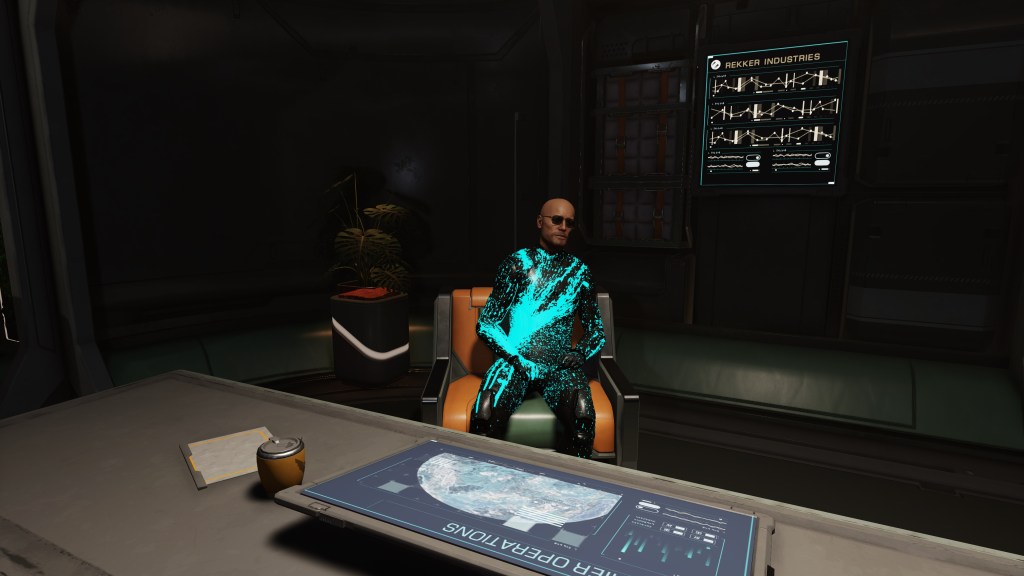
1.0 Introduction
This report details the initial findings and progress of “Operation Beneath The Veil”, a mission undertaken by Rekker Industries to breach and explore a recently discovered area of restricted space. As Executive Officer, I personally oversaw the tactical and scientific endeavors of this operation from aboard the fleet carrier, The Leviathan, which served as our mobile base of operations. The objectives were threefold: 1) penetrate the restricted area, 2) identify, survey and chart new celestial bodies, and 3) assess any potential threats or opportunities presented in the newly accessible space.
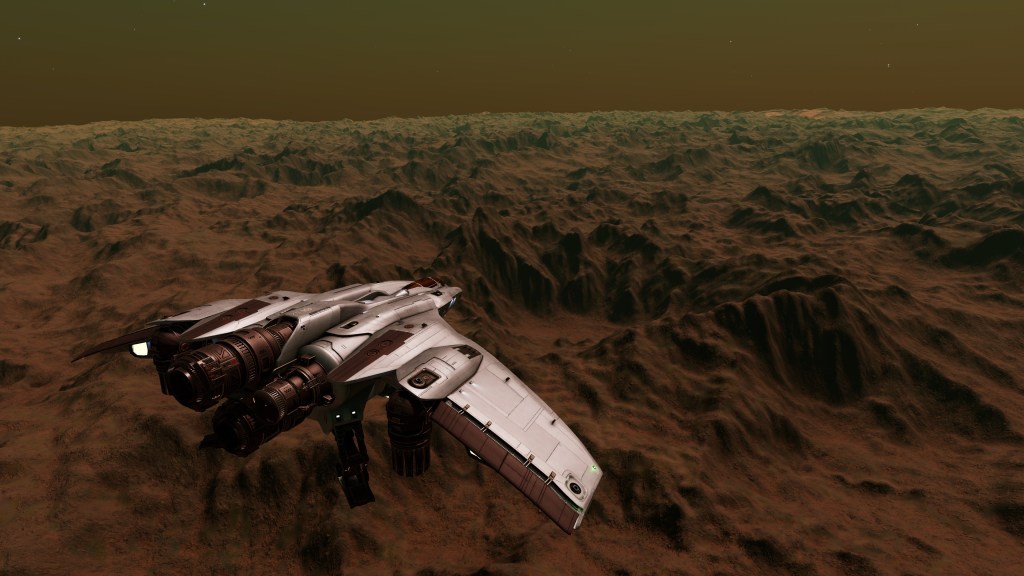
2.0 Breach and Navigation
The primary tactical challenge was the successful breaching of the established security perimeter. Using carefully calibrated navigation techniques and a modified jump drive configuration, The Leviathan achieved a successful transition through the restricted zone at 0750 standard Galactic Time. The process was not without risk, as the spatial distortion was considerable, resulting in minor fluctuations in power distribution to the fleet carrier. However, our engineering teams, led by Chief Engineer Anya Sharma, quickly rectified the issue, and the carrier maintained operational readiness. Post-breach, The Leviathan achieved stability, and our long-range sensors identified a previously uncharted system designated as OOCHOXT WK-N.
3.0 Discovery of OOCHOXT WK-N System
The OOCHOXT WK-N system presents as a stable, although somewhat unusual, star system with a single, moderately luminous G-type star at its center. The star’s radiation output appears consistent with expected parameters. Initial sensor sweeps indicated the presence of multiple celestial bodies orbiting the primary. The first planet in the system, identified as C23-4 1 B became our primary focus for initial investigation. This terrestrial world showed signs that included, an atmosphere, and possible vegetation.
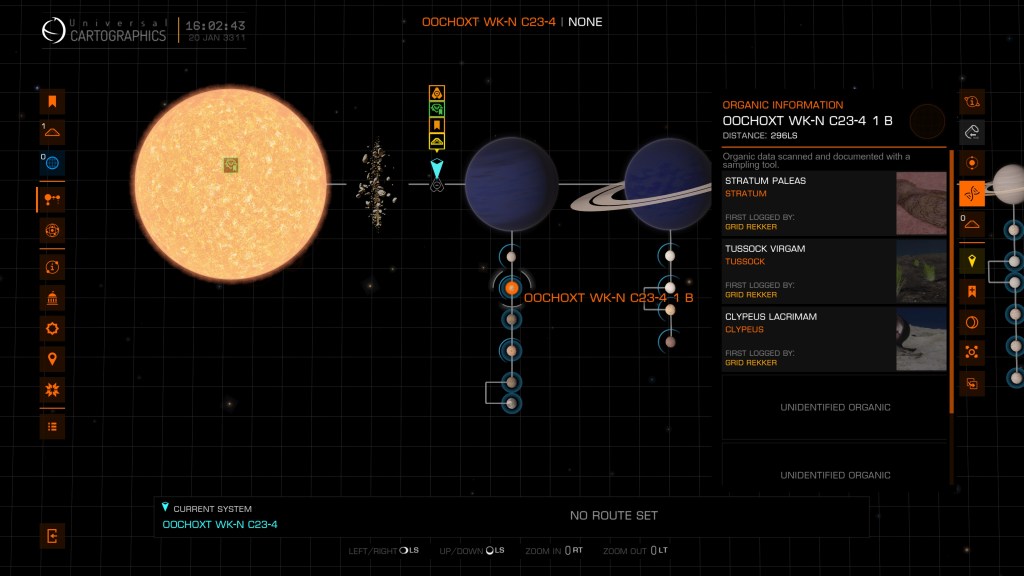
4.0 Planet C23-4 1 B: Initial Findings
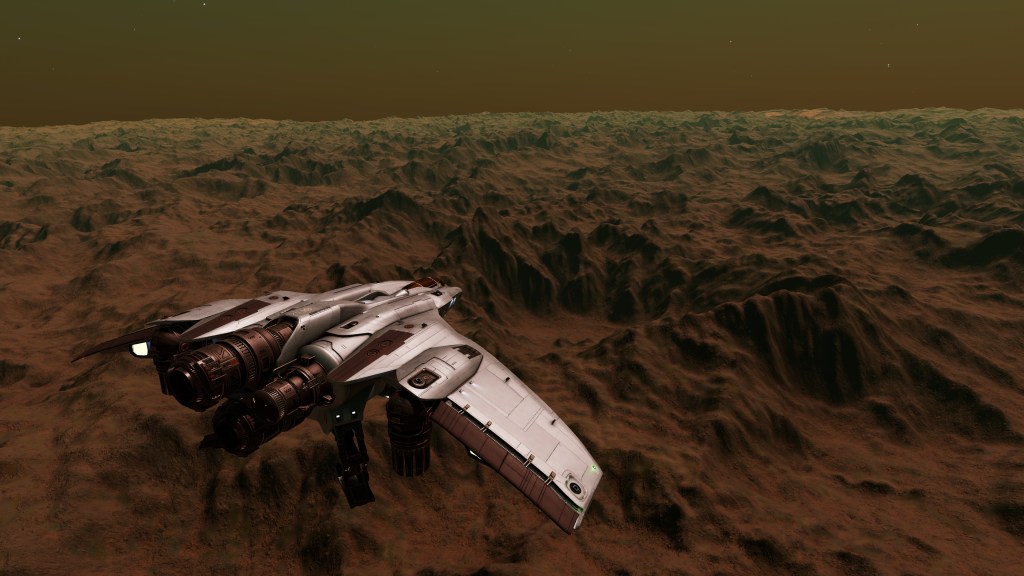
Upon entering orbit of C23-4 1 B, the surface proved to be a rich combination of geological features and biological activity. Initial scans indicated an atmosphere with acceptable levels of oxygen, although trace amounts of unknown gasses were detected. Large areas of the surface were covered in a flora unlike any documented in existing databases. Analysis of the flora is underway. It is a diverse mix of plant life, many of which display unusual characteristics, such as bioluminescence and distinct crystalline structures. Further study is critical to understanding their composition and potential uses.
The landscape itself is a mix of plains, deep canyons, and mountainous regions. These rugged terrains appear to be rich in mineral deposits, and this has encouraged the Geology team to investigate further.
5.0 The Thargoid Sensor and Alien Technology
Our most significant finding on C23-4 1 B was an alien artifact located in a canyon area. While the initial survey detected the presence of a large object, the detailed scan revealed it to be a Thargoid Sensor. It was, however, deactivated, showing no signs of power or activity. The reasons for its inactivity are currently unknown, and our team are running tests to establish if it can be brought online.
Surrounding the inactive sensor, we found numerous fragments and scattered components of what appears to be advanced alien technology. These were not all identified as Thargoid in origin, however they did match some of the unknown technologies from our databanks. These fragments and components, of varying sizes and compositions, were carefully cataloged and retrieved for detailed analysis back at our Research & Development labs. This includes some crystalline structures, metal alloys, and organic-looking polymers, all unlike anything we have encountered before.
These materials present a unique opportunity to understand the advanced technologies that these species have mastered. It is our goal to learn more about not just how these materials were made, but where they came from.
6.0 Collection of Biological Samples
As part of the mission objectives, collection of biological samples was critical. Our teams, led by Dr. Evelyn Reed, have deployed recon shuttles to different locations on C23-4 1 B, collecting samples from the diverse flora and fauna. These samples include terrestrial plants, fungal communities, and microbial elements. These samples are currently undergoing initial analysis within our mobile R&D labs onboard Rekker Industries Fleet Carrier.
Preliminary analysis indicates that the microorganisms detected on C23-4 1 B, including bacteria and microscopic fungal species, are genetically distinct from all known lifeforms. This further underscores the significance of this discovery and the potential for new scientific advancements through further study. It is very possible that this is the first time our science teams have seen these lifeforms.
7.0 Initial Analysis & Potential Implications
The data gathered on this initial phase of the mission is already providing new insights. The discovery of a new system, the diverse biology on C23-4 1 B, and the presence of alien technology— including a Thargoid Sensor— all indicate the necessity for continued exploration. While the potential reasons for the inactive sensor remain unknown, its very presence in this system is significant and could signify an important strategic location or place of historical interest.
The collected samples, both biological and technological, are now en route to our main labs for in-depth analysis. Our research teams will continue to assess them for their unique properties, composition, and potential applications. It is our hope that this research will yield new scientific breakthroughs and technological advancements for all of mankind.
8.0 Ongoing Operations and Future Objectives
“Operation Beneath The Veil” is an ongoing mission, and the information provided in this report is preliminary. Future operations will focus on:
System-Wide Mapping: Continue charting and mapping the remaining celestial bodies in the OOCHOXT WK-N system.
Geological Surveys: Conduct in-depth surveys of planet C23-4 1 B for mineral deposits and other geological markers.
Alien Artifact Analysis: Continue detailed investigation of the found Thargoid Sensor and other alien technologies to assess their origins and purposes.
Biological Analysis: Continue the assessment of any unknown flora and fauna, including the microscopic life.
We expect to issue further reports as our exploration of the system progresses and findings become available.
9.0 Conclusion
The successful penetration of the restricted space and the discovery of the OOCHOXT WK-N system represent significant achievements for Rekker Industries. The findings on C23-4 1 B suggest a location of potential significance to the history of alien races, as well as offering unique opportunities for scientific discovery. The mission is ongoing, and further reports will follow as more data is gathered and analyzed. We remain committed to uncovering the secrets of the unknown, and advancing the understanding of our universe.
Cmdr Grid Rekker Executive Officer Rekker Industries
 SWARTHOS
Leave a comment